It is the first question every American asks when considering dental work in Mexico: Is it safe? It is a fair question. You are making a decision about your health and your money in a foreign country. The honest, data-backed answer is: yes — dental work in Mexico is safe when you choose the right clinic. And the millions of Americans who cross the border for dental care every year are proof of that.
But "choosing the right clinic" is not something you leave to luck. This guide gives you a practical framework for making that choice intelligently.
The Scale of Dental Tourism in Mexico
Before getting into how-to, some context on scale. Mexico receives an estimated 1 million+ medical and dental tourists per year from the United States, making it the top medical tourism destination in the world for Americans. Los Algodones alone sees 6,000–10,000 American patients per week during peak season. Tijuana's dental district treats tens of thousands of Americans annually.
This is not a niche phenomenon. It is a mature, well-established industry. The demand exists because the savings are real, and the demand continues because — at qualified clinics — the quality is real too.
The Honest Risk Assessment
Are there bad dental clinics in Mexico? Yes — just as there are bad dental clinics in the United States. The risk in Mexico is not inherent to the country; it is a function of choosing the wrong provider. Americans who have negative experiences with Mexican dental work almost always have one thing in common: they chose a clinic based on price alone, without vetting the credentials, reading reviews, or getting a written treatment plan.
The risks of choosing a poor-quality clinic include:
- Incorrect diagnosis leading to unnecessary treatment
- Low-quality materials (cheap implant brands with higher failure rates, non-name-brand ceramics)
- Improper technique requiring corrective work later
- Inadequate sterilization practices (extremely rare at established clinics)
These risks are real but largely preventable with due diligence.
How Mexican Dentists Are Trained
A key misconception Americans have is that Mexican dental schools are inferior. In reality:
- Mexico's top dental schools — UNAM in Mexico City, Universidad de Guadalajara, Tecnológico de Monterrey — are accredited to international standards and produce highly trained graduates.
- Many specialists in border cities completed postgraduate training in the United States or Europe. Implant specialists often trained at institutions in Spain, Germany, or at US universities.
- Dentists in Mexico must complete a 4–5 year undergraduate program plus 1–3 years of specialty training (for implantologists, endodontists, periodontists, orthodontists, etc.).
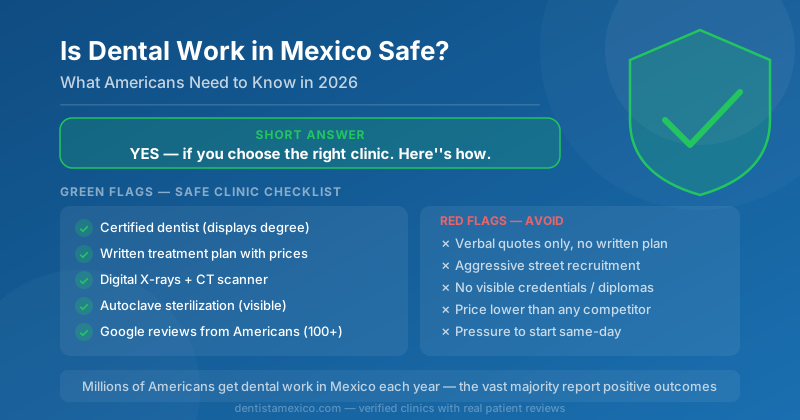
The Green Flag Checklist: Safe Clinic Signs
- Visible credentials. Diplomas, licenses, and specialty certificates should be displayed in the office. If you cannot find them, ask to see them. A dentist who trained where they say they trained will be happy to show you.
- Written treatment plan with itemized costs before you start. This is non-negotiable. Any clinic that pressures you to start treatment without a written plan first is a red flag.
- Modern digital X-rays and, for implant work, a 3D CT scanner (CBCT). Digital X-rays are now standard; any clinic still using film X-rays is operating with outdated equipment.
- Visible sterilization equipment. An autoclave should be present and in use. Packaged, sealed instruments show sterile technique.
- 100+ verified Google reviews from real patients. Read the 3–4 star reviews carefully — they reveal the most about how a clinic handles problems. A clinic with only 5-star reviews and generic text may have manipulated its ratings.
- Clear communication in English. If staff cannot communicate clearly about your diagnosis and treatment options, you cannot make an informed decision.
- No aggressive upselling. A trusted clinic recommends what you need — not the most expensive option. If every consultation somehow results in a recommendation for full-mouth implants, be skeptical.
The Red Flag Checklist: Walk Away
- No written treatment plan, or only verbal quotes
- Aggressive marketing from clinic representatives approaching you near the border crossing
- No visible diplomas or credentials for the operating dentist
- Price dramatically lower than all competitors (cheap materials cost less for a reason)
- Pressure to begin treatment immediately without time to consider
- No X-rays or diagnostic imaging before recommending treatment
- No clear answer when you ask about the specific implant brand or crown material being used
What About Follow-Up Care Back Home?
One practical concern Americans have is what happens if something goes wrong after they return to the US. A few things to know:
- Most reputable Mexican clinics offer remote consultation via WhatsApp, email, or video call if you have a question or concern after returning home.
- US dentists can address complications from Mexican work just as they would from any other dental work. The procedures and materials are the same.
- Ask about the clinic's warranty before starting treatment. Good clinics offer warranties on implants (typically 5–10 years) and will address problems during a return visit.
- Share records. Ask your Mexican clinic for your X-rays, CT scans, and treatment notes in digital format before you leave. This makes any follow-up with a US dentist much easier.
Specific Safety Questions by Procedure
Implants
Verify the implant brand. Nobel Biocare, Straumann, Zimmer Biomet, and Osstem are internationally certified brands with documented long-term success rates. Generic or unbranded implants are where quality risks concentrate.
Root Canals
Ask if the endodontist uses a dental microscope or loupes and rotary instrumentation. These are standard tools for quality root canal treatment and indicate a modern, properly equipped practice.
Crowns and Veneers
Ask specifically for IPS e.max (by Ivoclar) or Katana Zirconia (by Kuraray Noritake) — these are the internationally recognized brand-name ceramic materials. Generic ceramics from unspecified labs vary significantly in quality.
The Bottom Line
Dental work in Mexico is safe. The qualifier is: at the right clinic, chosen with the right research process. The millions of Americans who make this choice every year — including repeat patients who come back annually for maintenance — are the most compelling evidence available. Do your homework, use the checklist above, and you will be among the majority who return home with great results and significant savings.